How to Plan an Outdoor Fall Party in Kansas City: Tents, Heaters & Weather Tips
How to Plan an Outdoor Fall Party in Kansas City: Tents, Heaters & Weather Tips
Fall is one of the best times of year to host an outdoor event in Kansas City. The summer heat has finally started to fade, the trees are changing colors, football season is underway, and the cooler temperatures make spending an afternoon or evening outside much more enjoyable.
There is just one problem: Kansas City fall weather doesn't always cooperate.
A beautiful 70-degree afternoon can turn into a chilly evening surprisingly quickly. Add the possibility of rain, wind, or an unexpected cold front, and planning an outdoor event without some type of weather protection can be risky.
Whether you're planning a backyard birthday party, wedding reception, Chiefs watch party, company event, neighborhood gathering, graduation celebration, or family get-together, a tent can give you the flexibility to enjoy the outdoors without putting the entire event at the mercy of the weather.
Here are some of the most important things to consider when planning a fall outdoor event in the Kansas City area.
Why Fall Is a Great Time for Outdoor Events in Kansas City
There is a relatively short window in Kansas City when outdoor events can be especially comfortable. Summer events can mean intense heat and humidity, while winter brings an entirely different set of challenges.
Fall often lands right in the middle.
During the day, temperatures can be comfortable enough for guests to enjoy being outside without dealing with the summer heat. Fall colors also provide a great natural backdrop for weddings, birthday parties, corporate gatherings, and family celebrations.
Fall is also packed with reasons to get together.
Football watch parties and tailgates are in full swing. Couples choose September and October for outdoor weddings. Schools, churches, and community organizations host festivals and fundraisers. Families plan Halloween parties, birthdays, reunions, and neighborhood gatherings.
The challenge is that fall weather in Kansas City can change quickly, particularly as the season progresses.
That's where planning ahead makes a major difference.
1. Don't Plan Around the Perfect Weather Forecast
One of the biggest mistakes when planning an outdoor event is assuming the weather will be perfect.
If your event is still several weeks away, a forecast isn't going to give you much certainty anyway.
Instead, plan the event so it works under several different conditions.
Think about what happens if it's:
- Sunny and 75 degrees
- 55 degrees and cloudy
- Windy
- Lightly raining
- Much colder after sunset
A tent gives you a central covered area regardless of what happens.
On a beautiful afternoon, the sides can remain open and guests still get the feeling of being outdoors. If conditions become cooler or less comfortable, sidewalls can provide additional protection.
The goal isn't necessarily to completely eliminate the effects of outdoor weather. It's to make sure a minor change in weather doesn't ruin an otherwise great event.
2. Choose the Right Tent Size
Tent size depends on much more than the number of guests attending.
Two parties with 100 guests could require very different tent sizes.
If everyone is seated at tables for dinner, you'll need significantly more room than an event where people are primarily standing and mingling.
You may also need space for:
- Dining tables
- Chairs
- Buffet tables
- Bar area
- DJ or band
- Dance floor
- Gift table
- Cake or dessert table
- Registration table
- Serving stations
- Walkways
This is why it's helpful to think about what will actually happen underneath the tent, rather than simply saying, "We're expecting 100 people."
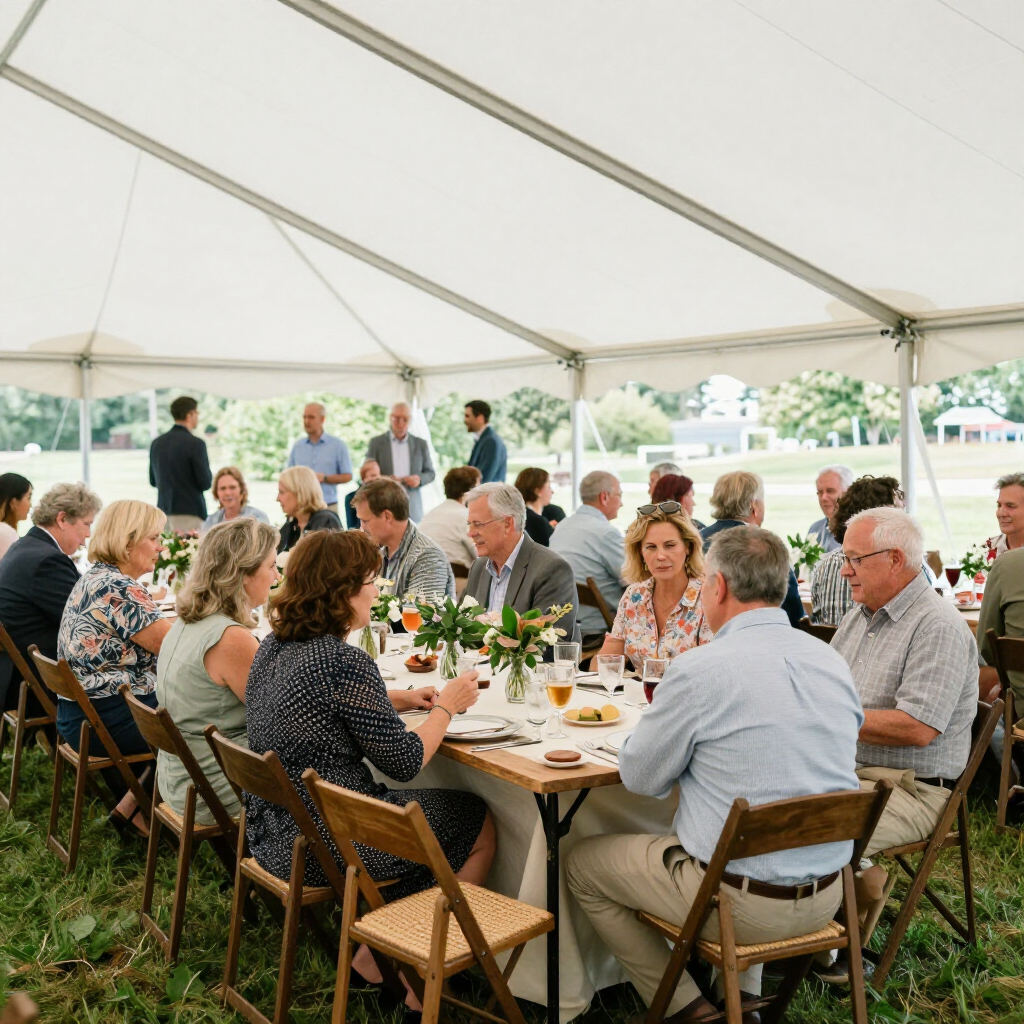
For example, a tent being used for a casual backyard Chiefs party might have several tables around the perimeter with an open center.
A wedding with the same number of guests might need dining tables, a head table, buffet, bar, DJ, dance floor, and additional circulation space.
Those are two completely different layouts.
When requesting a tent rental quote, tell the rental company both your expected guest count and how you plan to use the tent. That makes it much easier to recommend an appropriate size.
3. Remember That Tables and Chairs Take Up More Space Than You Think
It's easy to underestimate how much room tables and chairs require.
A table itself may only be a few feet wide, but guests need enough space to pull chairs out, sit comfortably, and walk behind other guests.
You'll also want clear aisles so people can reach the buffet, restroom, bar, exits, and other areas without squeezing between chairs.
For events with assigned seating or a full meal, create the seating layout before finalizing your tent size.
If you're trying to fit the absolute maximum number of people underneath a tent, the result may technically work—but it may not be particularly comfortable.
A little extra room can make a surprisingly large difference.
4. Consider Sidewalls for Fall Events
Sidewalls become increasingly useful as Kansas City moves deeper into fall.
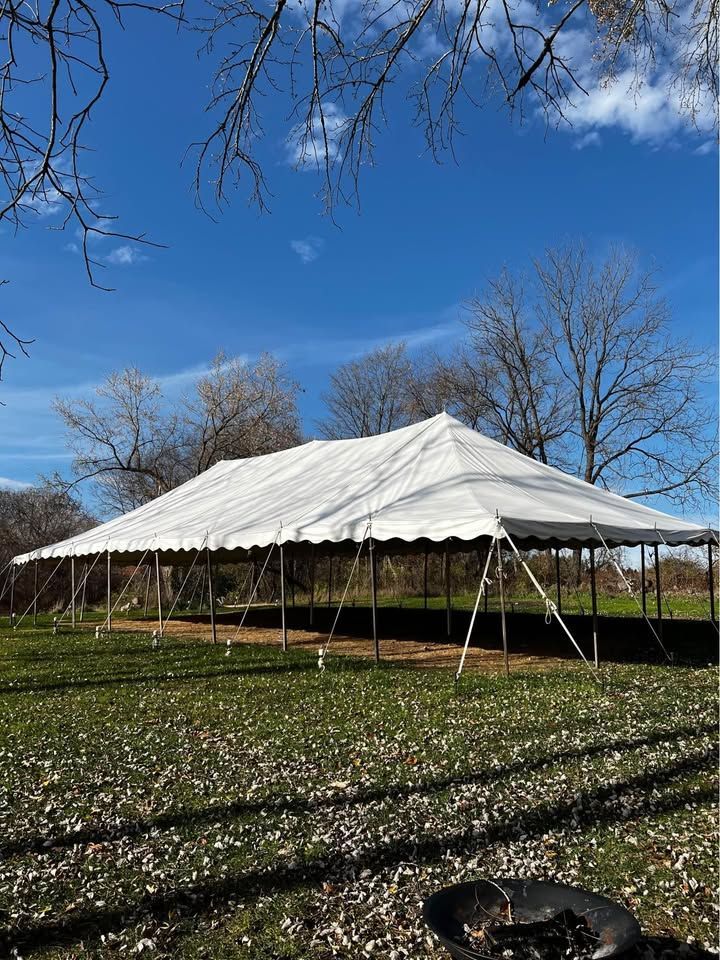
During a warm afternoon, an open-sided tent can be perfect. Guests get shade and overhead protection while air moves freely through the space.
Later in the evening, conditions may change.
Tent sidewalls can help provide protection from wind and cooler air and can make the covered space feel much more enclosed.
Depending on the event and weather conditions, you might use sidewalls on only one or two sides of the tent rather than enclosing the entire structure.
For example, if most of the wind is coming from one direction, strategically placed sidewalls may improve guest comfort while allowing the other sides of the tent to remain open.
Sidewalls can also give a wedding or formal event a more finished appearance.
5. Think About Heat Before the Day of the Party
For later fall events, heat may become part of the plan.
A sunny October afternoon could feel fantastic, while the same location several hours after sunset may feel considerably colder.
If the event extends into the evening, think about how your guests will feel after sitting outside for several hours.
This is particularly important for events with young children, older guests, or people dressed for a wedding or formal event rather than cold-weather activities.
Proper tent heating can make cooler events much more comfortable, but heaters need to be selected, positioned, and operated appropriately.
Never improvise with equipment that isn't intended for the application. Heater placement, ventilation, clearances, fuel sources, tent configuration, and manufacturer requirements all matter.
If heating will be necessary, discuss it with your rental provider while you're planning the event rather than trying to solve the problem at the last minute.
6. Pay Attention to Wind
Rain gets most of the attention when people think about outdoor events, but wind can be just as important.
Kansas City certainly isn't known for being wind-free.
Tent installations need to account for the surface they're being installed on and the anchoring requirements of the specific tent.
A tent on grass may be secured differently than one installed on pavement or another hard surface.
This is one reason the rental company needs to know exactly where the tent will be installed.
You should also avoid attaching banners, decorations, tarps, lighting, or other items to the tent without first checking whether they're appropriate.
Wind can place significant loads on a tent structure, and adding large decorations or improperly secured materials can make the situation worse.
If severe weather is expected, follow the rental company's safety instructions. A party tent should never be treated as a storm shelter.
7. Have a Rain Plan
A tent can save an event from light rain, but there are still several things to think about.
Where will guests enter?
Can they get from the house or parking area to the tent without walking through mud?
Where will water drain?
Is the tent located in a low spot where water tends to collect?
These details are easy to overlook when the yard is dry.
If you're planning a backyard event, take a look at the property after a normal rainstorm before deciding exactly where everything will go.
A perfectly flat-looking section of yard may turn into a soggy area after several hours of rain.
You may also want a covered or protected path for food and supplies moving between the house and tent.
8. Plan for Earlier Sunsets
This is an easy one to forget.
As fall progresses, daylight disappears earlier.
An event that begins in the afternoon may continue several hours after sunset.
That means lighting needs to be part of the plan.
Lighting can be functional and decorative at the same time.
String lighting, perimeter lighting, chandeliers, lantern-style fixtures, or other event lighting can completely change the atmosphere underneath a tent.
You'll also need to think beyond the tent itself.
Make sure guests can safely see:
- Walkways
- Steps
- Parking areas
- Restroom paths
- Uneven ground
- Entrances and exits
A beautifully lit tent doesn't help much if guests have to walk across a completely dark yard to reach it.
9. Make Food and Drinks Easy to Access
Fall events often revolve around food.
Depending on the party, that might mean barbecue, chili, catered meals, appetizers, desserts, hot drinks, or a full buffet.
Plan where the food will go before the tent is installed.
Buffet tables need room for guests to form a line without blocking the main seating area.
For larger events, having access to both sides of a buffet can sometimes improve traffic flow.
If you're serving drinks, consider separating the beverage station or bar from the food line so everyone isn't congregating in one area.
For a casual fall party, hot chocolate, coffee, apple cider, or other warm drinks can also be a nice addition once the temperature starts dropping.
10. Take Advantage of the Fall Atmosphere
One of the best things about a fall event is that you don't have to work very hard to create a great atmosphere.
Fall colors already provide much of the backdrop.
Simple decorations can go a long way:
Pumpkins, mums, hay bales, warm string lighting, wood accents, seasonal centerpieces, blankets, and fall-colored linens can transform an ordinary backyard into a great event space.
For evening events, lighting makes an especially big difference.
A tent that looks fairly simple during daylight can feel completely different once the sun goes down and the lights come on.
You don't necessarily need elaborate decorations. A clean tent, good lighting, comfortable seating, and a few seasonal details can create an impressive setup.
11. Consider Your Guests' Comfort
When you're hosting an event, you're moving around.
Your guests may be sitting in the same place for an hour or more.
That means they'll usually notice the temperature before you do.
For cooler fall events, consider having a few inexpensive blankets available. If children will be attending, make sure there's an area where they can comfortably play without being directly exposed to wind or cold.
For weddings and formal events, let guests know in advance if a significant portion of the event will be outdoors. That gives everyone a chance to dress appropriately.
Little details can make the difference between guests leaving early and everyone staying to enjoy the evening.
12. Book Fall Tent Rentals Early
People sometimes assume tent rentals slow down immediately after summer.
That's not necessarily the case.
Fall can still be busy with weddings, school events, corporate gatherings, football parties, festivals, church events, and private celebrations.
Certain tent sizes, tables, chairs, and sidewalls may have limited availability on popular weekends.
If you already know your event date, there's usually little advantage to waiting until the last minute.
Booking early also gives you more time to think through the layout instead of simply taking whatever equipment happens to remain available.
What Type of Kansas City Fall Events Work Well Under a Tent?
Almost any outdoor gathering can benefit from having covered space.
Some of the most common fall events include backyard birthday parties, wedding receptions, rehearsal dinners, Chiefs watch parties, tailgates, Halloween parties, Oktoberfest-style gatherings, school fundraisers, church events, corporate events, employee appreciation parties, neighborhood gatherings, family reunions, graduation celebrations, and retirement parties.
A tent doesn't necessarily have to contain the entire event.
For many backyard parties, the tent simply becomes the home base.
Food, tables, chairs, and guests who want to sit are underneath the tent, while everyone else can move freely around the yard when the weather is nice.
That flexibility is one of the biggest advantages of tented events.
Planning a Fall Event in the Kansas City Area?
Fall is a great time to host an outdoor event in Kansas City—as long as you're prepared for the possibility that the weather may have other plans.
Choosing the right tent size, thinking about sidewalls, planning for cooler evening temperatures, creating a good lighting setup, and considering how guests will move through the space can make an enormous difference.
At KC Tent Rental, we provide event tent rentals along with tables, chairs, sidewalls, and other rental options for gatherings throughout the Kansas City area.
Whether you're planning a small backyard celebration or an event with a large guest list, we can help you determine what size tent and setup makes sense for your space.
Planning a fall event? Contact KC Tent Rental today to check availability and get a quote for your event.
Blog